

Explore our academic programs
Discover a world of learning opportunities with The Historic Preservationist Society & Academy®. Our academic programs are designed to inspire, educate, and empower the next generation of preservationists, offering both in-person and flexible online options. Each program is made up of several micro-courses 6 weeks in duration, making completion of the entire program quick and ideal for busy, working students with tight schedules
Our Accredited Certificate Programs
CERTIFIED PROFESSIONAL PRESERVATIONIST PROGRAMS

Choose from our three academic pathways to becoming a Certified Professional Preservationist!


A Certified Professional Architectural Building Preservationist is a specialist dedicated to protecting, conserving, and rehabilitating historic and architecturally significant buildings. Preservationists study a structure’s history, architectural style, construction methods, materials, and cultural importance to determine how it can be maintained or restored while retaining its historic character. They may collaborate with architects, engineers, conservators, historians, craftspeople, property owners, and government agencies on restoration projects, historic documentation, adaptive reuse, and preservation planning. Their work helps ensure that significant buildings remain safe, functional, and authentic while preserving our architectural heritage for future generations.
Each program is made up of several micro-courses 6 weeks in duration, making completion of the entire program quick and ideal for busy, working students with tight schedules
Certificate in Architectural Heritage & Building Conservation
Equips learners with the skills to analyze, document, and preserve historical structures.
AH-101: Global Survey of Architecture: Antiquity to Modernism
Duration: 6 weeks
Covers structural engineering, aesthetics, and cultural contexts from Roman arches to Postmodern steel.
AH-102: Regional & Vernacular Architecture
Duration: 6 weeks
Studies local building traditions, material choices, and domestic architecture (e.g., English Baroque, Palladian estates, Gilded Age mansions).
AH-201: Preservation Ethics, Law, & Adaptive Reuse
Duration: 6 weeks
Examines local zoning, historic registry designations, tax incentives, and repurposing historic structures.
Total Program Duration: 18 weeks
Certificate in Visual Culture & Curatorial Foundations
Designed for museum volunteers, gallery personnel, and cultural arts writers seeking formal methodology.
ARTH-101: Masterworks of Western & Global Art
Duration: 8 weeks
Analytical survey of painting, sculpture, and decorative arts from the Middle Ages through Modernism.
ARTH-102: Methodologies of Art History
Duration: 8 weeks
Teaches formal analysis, iconography, provenance research, and social history methods.
ARTH-201: Decorative Arts, Furniture, & Material Culture
Duration: 8 weeks
Traces the history of interior aesthetics, textiles, metalwork, and functional craftsmanship.
Total Program Duration: 24 weeks
Certificate in Public History & American Heritage Interpretation
Geared toward historic site administrators, archivists, and writers focused on early American history and regional culture.
HH-101: The Atlantic World (1492–1800)
Duration: 8 weeks
Examines the movement of people, political philosophies, and trade between Europe, Africa, and the Americas.
HH-102: Ideology & Culture in Early America
Duration: 8 weeks
Traces the intellectual, social, and architectural influences of European traditions on the American Republic.
Total Program Duration: 16 Weeks
Duration: 8 Weeks | Format: Asynchronous Lectures + Live Seminars
Week 1 Foundations of the Built Environment: Materials, gravity, and the Post-and-Lintel system. Egypt and early Near East.
Week 2 The Classical World: Greek orders, proportion, and the Roman arch/ vault revolution (concrete).
Week 3 Sacred Spaces: Byzantine domes, Romanesque massing, and the structural triumph of the Gothic cathedral.
Week 4 The Renaissance: Humanism, symmetry, and the revival of antiquity (Brunelleschi, Palladio).
Week 5 Baroque & Rococo: Architecture as theatrical display and power in Europe.
Week 6 The Industrial Revolution: Iron, glass, and the birth of new building typologies (train stations, exhibition halls).
Week 7 The Rise of the Skyscraper: The Chicago School, steel frames, and the elevator.
Week 8 Modernism & Beyond: The International Style, Bauhaus, and Postmodern critiques. Final Exam & Essay.
Focus: Stately Homes, Estates, and Domestic Architecture.
Week 1 What is Vernacular? Climate, local materials, and cultural tradition vs. 'High Architecture'.
Week 2 The British Country House I: Tudor fortification to the early Jacobean manor.
Week 3 The British Country House II: The English Baroque and the grandeur of estates like Blenheim Palace.
Week 4 The British Country House III: Palladianism and the Georgian obsession with classical symmetry.
Week 5 Early American Adaptation: Colonial vernacular (saltbox, Cape Cod) vs. Georgian imports.
Week 6 The Antebellum Plantation House: Greek Revival dominance and the architecture of the Southern planter elite.
Week 7 The American Gilded Age: Beaux-Arts mansions, Newport cottages, and Biltmore Estate.
Week 8 Architecture of the Servant Class: Analyzing back-stairs layout, outbuildings, and invisible labor design. Final Project.
Week 1-2 History of Preservation: From saving Mount Vernon to the National Historic Preservation Act of 1966.
Week 3-4 The Secretary of the Interior's Standards: Preservation, Rehabilitation, Restoration, and Reconstruction defined.
Week 5-6 Legal Frameworks: The National Register of Historic Places, local zoning laws, and historic district commissions.
Week 7-8 Adaptive Reuse: Economic incentives, tax credits, and case studies of successful modern interventions in historic shells.
Archival Research: Utilizing deeds, Sanborn Fire Insurance maps, historic photos, and census data.
Week 3-4 Visual Auditing: Identifying alterations, additions, and reading the "scars" of a building's history.
Week 5-6 Field Measuring & Drafting: Techniques for accurate site measuring and creating basic floor plans/elevations.
Week 7-8 The Historic Structure Report (HSR): Compiling research, condition assessments, and treatment recommendations.
Week 1-2 Antiquity to Middle Ages: Greco-Roman ideals, Byzantine icons, and the illuminated manuscript.
Week 3-4 The Renaissance & Baroque: The shift from religious to secular patronage; linear perspective, light, and drama.
Week 5-6 19th Century Revolutions: Neoclassicism, Romanticism, and the birth of Impressionism.
Week 7-8 Modernism to Contemporary: Cubism, Surrealism, Pop Art, and the shift to conceptual installations.
Week 1-2 Formal Analysis: Developing a visual vocabulary to dissect composition, color, line, and texture.
Week 3-4 Iconography & Semiotics: Decoding symbols and hidden meanings in religious and historical works.
Week 5-6 Social History of Art: Marxist, Feminist, and Post-Colonial approaches to analyzing who makes art and why.
Week 7-8 Provenance & The Art Market: Tracing ownership history, the role of auction houses, and restitution claims.
The Guild System to the Factory: How craftsmanship evolved through the Industrial Revolution.
Week 3-4 Furniture Periods: Identifying key styles (e.g., Chippendale, Hepplewhite, Empire, Victorian).
Week 5-6 Ceramics, Glass, & Silver: Status symbols of the dining room from the 17th to 19th centuries.
Week 7-8 The Arts & Crafts Movement: The backlash against industrialization; Morris, Stickley, and the return to the handmade.
Week 1-2 The Role of the Curator: Balancing academic research with public engagement and institutional mission.
Week 3-4 Writing for the Gallery: Crafting compelling exhibition narratives and accessible object labels.
Week 5-6 Collection Management: Basics of accessioning, condition reporting, and proper handling of artifacts.
Week 7-8 Digital Curation: Utilizing omeka/content management systems to build engaging online exhibitions.
Week 1-2 First Contacts: Indigenous populations of the Americas and initial European exploration.
Week 3-4 The Columbian Exchange: The transfer of flora, fauna, disease, and culture across the Atlantic.
Week 5-6 Transatlantic Trade & Slavery: The economic engines driving empire expansion and the Middle Passage.
Week 7-8 The Age of Revolutions: Political upheaval in America, France, and Haiti connected by Atlantic networks.
Week 1-2 Puritan Roots vs. Chesapeake Cash: Divergent cultures in the early English colonies.
Week 3-4 The Enlightenment in America: European philosophy meets colonial pragmatism (Locke, Franklin, Jefferson).
Week 5-6 Print Culture & The Public Sphere: The role of taverns, broadsides, and newspapers in forming an American identity.
Week 7-8 Creating the Republic: The Constitution, Federalism, and establishing national institutions.
King Cotton: The invention of the cotton gin and the westward expansion of the plantation economy.
Week 3-4 The Planter Elite: Paternalism, honor culture, dueling, and the mythology of the "Cavalier."
Week 5-6 The Institution of Slavery: Labor systems, resistance, family structure, and slave culture.
Week 7-8 Yeomen & Poor Whites: The non-slaveholding majority and the complex racial/class dynamics of the South.
Week 1-2 Principles of Interpretation: Connecting tangibles (objects/sites) to intangibles (themes/emotions) (Tilden's Principles).
Week 3-4 Interpreting Difficult History: Ethical approaches to discussing slavery, conflict, and marginalized voices at historic sites.
Week 5-6 Living History & Costumed Interpretation: First-person vs. thirdperson interpretation techniques and historical accuracy.
Week 7-8 Visitor Experience Design: Assessing audience needs, accessibility, and creating engaging tour narratives.
📢⚠️📢
THE PROGRAM GUIDE ABOVE IS AN EXAMPLE OF A TYPICAL PROGRAM SYLLIBUS & IS MEANT TO INFORM PROSPESCTIVE STUDENTS ABOUT THE CURRICULUM & CLASSES THEY WOULD NEED TO PASS IN ORDER TO RECEIVE THEIR CREDENTIAL.
ALL SPECIFIC PROGRAM GUIDES COME FROM YOUR ASSIGNED INSTRUCTOr
CERTIFIED PROFESSIONAL BUILDING CURATOR PROGRAM
A Certified Professional Building Curator is a specialist responsible for preserving, interpreting, documenting, and helping manage historically or architecturally significant buildings. Combining knowledge of architectural history, historic preservation, conservation, collections management, and public interpretation, a building curator researches a property's history, evaluates significant architectural features and materials, helps coordinate appropriate restoration and maintenance, and develops educational information that explains the building's cultural importance. Professional building curators may work with historic homes, museums, estates, government properties, universities, preservation organizations, and heritage sites, serving as stewards who help ensure that important buildings and their stories are protected for future generations.

St. James Palace is a Tudor style brick palace in the UK which has a building curators and preservation staff looking after its integrity and caring for the entire external and internal structure for future generations to enjoy!

Interior image of the main staircase in St. James Palace.
OUR TRIPLE ACCREDITED PROGRAM CURRICULUM GUIDES
CERTIFIED PROFESSIONAL CURATOR OF HISTORICAL BUILDINGS (CPCHB)
HBC-201 — Historic Materials, Fabric & Building Pathology
Duration: 6 Weeks
Provides an academic introduction to historic building materials, deterioration, condition assessment, and conservation decision-making.
Week 1 – Masonry: Monday through Thursday cover brick, stone, mortar, stucco, and deterioration mechanisms. Friday requires a masonry condition-assessment exercise.
Week 2 – Wood & Carpentry: Students examine historic framing, siding, flooring, millwork, windows, doors, joinery, decay, insects, and moisture.
Week 3 – Metals, Glass & Roofing: Lessons address iron, steel, copper, lead, historic glass, slate, tile, wood shingles, and traditional roofing systems.
Week 4 – Plaster, Paint & Finishes: Students study lime plaster, gypsum, decorative plaster, historic paints, wallpapers, finishes, and methods of identifying surviving material layers.
Week 5 – Building Pathology: Daily topics include water intrusion, rising damp, condensation, settlement, cracking, corrosion, biological growth, and inappropriate repairs. Students prepare a condition survey.
Week 6 – Conservation Decisions: Students study repair versus replacement, minimum intervention, compatibility, reversibility, documentation, and when specialist intervention is necessary. The course concludes with a Historic Fabric Condition Report and examination.
HBC-202 — Historic Interiors, Furnishings & Decorative Arts
Duration: 6 Weeks
Examines the historic interior as an integrated curatorial environment.
Week 1 – Reading Historic Interiors: Students study room hierarchy, circulation, function, architectural finishes, period rooms, and evidence of changing occupancy.
Week 2 – Furniture: Lessons introduce furniture chronology, construction, woods, upholstery, provenance, reproduction furnishings, and ethical presentation.
Week 3 – Decorative Arts: Students examine ceramics, silver, glass, clocks, lighting, textiles, paintings, prints, sculpture, and domestic objects.
Week 4 – Historic Interior Finishes: Lessons cover wallpapers, paints, plaster decoration, flooring, window treatments, textiles, and historic color research.
Week 5 – Furnishing Historic Buildings: Students explore period rooms, documented interiors, conjectural furnishing, comparative evidence, inventories, photographs, and responsible use of reproductions.
Week 6 – Curatorial Interior Plan: Students design an evidence-based room presentation, including object selection, placement, interpretation, environmental concerns, and documentation. The project becomes part of the CPCHB portfolio.
HBC-301 — Documentation, Research & Collections Management
Duration: 6 Weeks
Teaches students how documentary evidence and collections records support responsible building curation.
Week 1 – Historical Research: Daily lessons cover primary versus secondary sources, deeds, maps, newspapers, photographs, correspondence, directories, census material, and institutional archives.
Week 2 – Building Documentation: Students learn measured documentation concepts, photography standards, floor-plan annotation, condition photography, field notes, and chronology.
Week 3 – Provenance: Lessons examine ownership history, object provenance, chain of custody, attribution, oral history, and evaluation of conflicting evidence.
Week 4 – Cataloging & Registration: Students practice accession numbering, catalog records, object descriptions, location tracking, inventories, loans, and deaccessioning principles.
Week 5 – Digital Collections: Topics include digital asset management, file naming, metadata, digitization, databases, backups, rights information, and preservation of digital records.
Week 6 – Documentation Project: Students produce a Historic Property Curatorial Record, including chronology, source bibliography, sample catalog records, photographic documentation, and an examination.
HBC-302 — Preservation Planning & Preventive Conservation
Duration: 6 Weeks
Moves students from identifying historic resources to planning their responsible long-term care.
Week 1 – Preservation Philosophy: Students compare preservation, conservation, rehabilitation, restoration, reconstruction, and adaptive reuse.
Week 2 – Condition Assessment: Daily exercises address inspections, condition terminology, prioritization, monitoring, photography, and reporting.
Week 3 – Preventive Conservation: Students study temperature, relative humidity, light, pollutants, pests, housekeeping, storage, object handling, and environmental monitoring.
Week 4 – Building Systems: Lessons introduce HVAC, electrical, plumbing, fire protection, security, accessibility, and the challenge of introducing modern systems into historic fabric.
Week 5 – Risk & Emergency Planning: Students examine fire, flood, storms, vandalism, theft, collections emergencies, emergency documentation, salvage priorities, and disaster-response planning.
Week 6 – Preservation Management Plan: Each student prepares a prioritized Five-Year Historic Property Preservation Plan, distinguishing routine maintenance, specialist conservation, capital work, monitoring, and emergency priorities.
HBC-401 — Interpretation, Exhibitions & Public History
Duration: 6 Weeks
Develops the ability to communicate the history and significance of historic buildings accurately and engagingly.
Week 1 – Principles of Public History: Students examine audiences, historical narratives, interpretation versus information, evidence, context, and multiple perspectives.
Week 2 – Research to Story: Daily assignments transform archival and architectural evidence into interpretive themes, supporting stories, and visitor takeaways.
Week 3 – Historic House Interpretation: Students study guided tours, self-guided experiences, period rooms, first-person and third-person interpretation, and visitor engagement.
Week 4 – Exhibitions: Lessons address exhibit objectives, object selection, labels, visual hierarchy, accessibility, reproductions, interactive media, and digital interpretation.
Week 5 – Difficult & Underrepresented Histories: Students learn methods for interpreting slavery, labor, class, race, displacement, conflict, gender, and other historically sensitive subjects through evidence-based and respectful scholarship.
Week 6 – Interpretation Project: Students create a complete Historic Building Interpretation Plan, including a central theme, visitor objectives, room-by-room interpretation, sample labels, and a short tour script.
HBC-402 — Professional Curatorial Practice & Capstone
Duration: 6 Weeks
The culminating course integrates the knowledge acquired throughout the CPCHB curriculum.
Week 1 – Curatorial Administration: Lessons cover policies, annual planning, budgets, records, contractors, consultants, volunteers, governing organizations, and institutional accountability.
Week 2 – Legal & Ethical Responsibilities: Students study ownership, loans, insurance, copyright basics, accessibility, safety, collections policies, professional boundaries, and regulatory considerations.
Week 3 – Managing Historic Properties: Students develop maintenance calendars, inspection schedules, collections routines, contractor documentation, project files, and institutional records.
Week 4 – Capstone Development: Students select a real or instructor-approved hypothetical historic building and compile its history, architectural analysis, condition information, collections strategy, preservation priorities, and interpretation plan.
Week 5 – Professional Curatorial Plan: Students complete a comprehensive Historic Building Curatorial Management Plan demonstrating competency across the entire program.
Week 6 – Certification Assessment: Days 1–2 are comprehensive review; Day 3 is the cumulative written examination; Day 4 is capstone submission and presentation; Day 5 is final evaluation and professional reflection.
CPCHB Graduation Requirements
To earn the Certificate for Professional Curator of Historical Buildings (CPCHB), a student should successfully complete all eight six-week courses, pass each course assessment, complete all eight major applied assignments, pass the cumulative CPCHB examination, and successfully complete the HBC-402 Historic Building Curatorial Management Plan.
A suggested passing standard is 70% for individual courses and 75% on the final cumulative certification assessment, with satisfactory completion of the capstone required regardless of examination score.
Credential Language
Upon successful completion, the academy could state:
Historical Preservationist Society and Academy
confers the
Certificate for Professional Curator of Historical Buildings
upon the graduate who has successfully completed the prescribed 48-week Professional Historic Building Curation curriculum and demonstrated competency in architectural history, historic building documentation, material conservation principles, historic interiors and collections, preservation planning, interpretation, and professional curatorial stewardship.
Post-Nominal Credential: CPCHB
This structure also gives you a very good foundation for creating a student handbook, individual 6-week syllabi, 100-question cumulative final examination, instructor answer key, and CPCHB capstone workbook as the next program materials.
CERTIFIED PROFESSIONAL DOCENT OF HISTORICAL BULDINGS (CPDHB)
WHAT IS A CERTIFIED PROFESSIONAL DOCENT?
A Certified Professional Docent of Historical Buildings is a trained guide and interpreter who educates visitors about the history, architecture, people, artifacts, and cultural significance of historic homes, buildings, museums, and heritage sites. Unlike a general tour guide, a professional docent is prepared to interpret historical information accurately, explain architectural features and preservation efforts, answer visitor questions, and present engaging stories based on reliable historical research. Professional docents serve as a bridge between the historic property and the public, helping visitors understand not only what they are seeing, but why the building and its history are important to preserve.
Program Guide for Certified Professional Docent of Historical Buildings
Certified Professional Docent of Historical Buildings (CPDHB)
Credential Awarded: Certificate for Certified Professional Docent of Historical Buildings (CPDHB)
Program Length: 8 Courses • 48 Instructional Weeks
Course Length: 6 Weeks Each
Delivery: Online / Self-Paced Distance Education
Course Prefix: DHB
Program Division: History, Heritage & Architectural Interpretation
Program Purpose
The Certified Professional Docent of Historical Buildings program provides structured education for individuals seeking to interpret historic houses, buildings, estates, museums, monuments, and architectural heritage sites for the public. The curriculum combines architectural history, historical research, preservation awareness, public history, interpretive storytelling, visitor engagement, professional ethics, and tour development.
Unlike the CPCHB program, which emphasizes the stewardship and preservation of historic properties, the CPDHB concentrates on interpreting those properties for visitors and communicating their historical significance accurately and effectively.
Upon successful completion of all eight courses and program requirements, students earn the Certificate for Certified Professional Docent of Historical Buildings (CPDHB) from the Historical Preservationist Society & Academy.
CPDHB Curriculum
DHB-101 — Foundations of Historic Building Interpretation
Duration: 6 Weeks
Introduces the professional role of the historic-building docent and the principles of public history and heritage interpretation. Students learn how historic properties communicate information about people, communities, architecture, economics, politics, technology, and everyday life.
Six-Week Progression: Week 1 introduces professional docent work and terminology; Week 2 examines historic houses and heritage institutions; Week 3 introduces public history; Week 4 explores historical significance and context; Week 5 examines preservation and interpretation; and Week 6 requires students to prepare a preliminary interpretive presentation for a selected historic property.
DHB-102 — Architectural History for Professional Docents
Duration: 6 Weeks
Provides the architectural literacy necessary to confidently interpret historic buildings. Students learn to recognize major architectural periods, styles, building components, construction materials, decorative features, and changes made to buildings over time.
Six-Week Progression: Week 1 covers architectural vocabulary; Week 2 examines Colonial and Georgian architecture; Week 3 addresses Federal, Greek Revival, and Gothic Revival traditions; Week 4 examines Victorian-era architecture; Week 5 introduces late nineteenth- and twentieth-century styles; and Week 6 focuses on conducting an architectural interpretation of an actual historic building.
DHB-201 — Historical Research, Documentation & Source Evaluation
Duration: 6 Weeks
Trains students to research the history of buildings and the people associated with them. Students work with primary and secondary sources while learning to distinguish documented historical evidence from tradition, speculation, legend, and unsupported claims.
Six-Week Progression: Students progress through archival research, historic newspapers, census and genealogical sources, property records, maps, photographs, oral histories, source verification, citation practices, and the preparation of a concise building-history research dossier.
DHB-202 — Historic Preservation & Material Culture for Docents
Duration: 6 Weeks
Adapted in part from concepts relevant to the CPCHB curriculum, this course teaches docents enough preservation knowledge to accurately explain how historic buildings are conserved without preparing them to perform professional conservation work themselves.
Students study original building materials, historic interiors, furnishings, decorative arts, preservation terminology, restoration versus rehabilitation, adaptive reuse, and the importance of maintaining architectural authenticity.
Final Assignment: Students create a visitor-friendly presentation explaining the preservation history of a selected building.
DHB-301 — Interpretive Storytelling & Historical Narratives
Duration: 6 Weeks
Develops one of the docent's most important professional skills: transforming historical research into compelling and responsible interpretation.
Students learn narrative structure, historical storytelling, thematic interpretation, audience engagement, transitions, pacing, object-centered interpretation, and techniques for presenting complicated histories without sacrificing historical accuracy.
Weeks 5 and 6 emphasize constructing a complete interpretive narrative and delivering a simulated docent presentation.
DHB-302 — Visitor Engagement, Tour Leadership & Public Speaking
Duration: 6 Weeks
Provides practical preparation for leading individuals and groups through historic properties.
Students study professional speaking techniques, voice projection, body language, group movement, tour timing, questioning techniques, visitor interaction, accessibility considerations, handling interruptions, working with children and school groups, and responding appropriately when a docent does not know the answer to a visitor's question.
The course culminates in the creation and delivery of a 30–45 minute simulated historic-building tour.
DHB-401 — Ethics, Inclusive Interpretation & Difficult Histories
Duration: 6 Weeks
Examines the ethical responsibilities associated with interpreting historic places. Students learn to distinguish evidence from interpretation and to communicate uncertainty honestly.
Course topics include cultural sensitivity, historically marginalized communities, slavery and servitude, Indigenous history, immigration, labor history, war and political conflict, religious history, death and tragedy, contested historical narratives, myths surrounding historic properties, and responsible treatment of sensitive subjects.
Students develop an interpretive plan demonstrating how multiple historically supported perspectives can be incorporated into a property tour.
DHB-402 — Professional Docent Practicum & Capstone
Duration: 6 Weeks
The final course integrates the entire CPDHB curriculum into a professional-level interpretive project.
Students select an actual or instructor-approved historic building and develop a comprehensive Historic Building Docent Portfolio.
The portfolio includes historical research, architectural analysis, a building chronology, significant-person profiles, preservation information, visitor learning objectives, tour route, interpretive themes, accessibility considerations, visitor questions and answers, and a complete professional docent script.
Week 6 concludes with the CPDHB cumulative assessment and final docent presentation.
Daily Academic Structure
Each six-week CPDHB course follows a consistent Monday–Friday academic schedule, allowing students to progress independently while maintaining an organized learning sequence.
Day
Primary Activity
Monday
Assigned reading and weekly lecture/module
Tuesday
Historical or architectural case study
Wednesday
Research, documentation, or interpretive exercise
Thursday
Applied docent/tour-development assignment
Friday
Weekly assessment, reflection, or presentation activity
Students therefore complete approximately 30 structured instructional days per course, resulting in approximately 240 daily instructional units across the complete CPDHB program.
Academic Progression
The program intentionally progresses through three stages. Courses 101–202 establish knowledge, giving students foundations in history, architecture, research, and preservation. Courses 301–401 develop professional interpretation skills, including storytelling, public speaking, visitor management, and ethical interpretation. DHB-402 demonstrates competency by requiring the student to combine those abilities into a complete historic-property interpretation project.
Graduation Requirements
To earn the Certified Professional Docent of Historical Buildings (CPDHB) credential, a student must successfully complete all eight six-week courses, required weekly assignments and assessments, the professional docent portfolio, the simulated final tour/presentation, and the CPDHB cumulative final assessment.
Total Program Duration: 48 instructional weeks
Courses: 8
Instructional Length per Course: 6 weeks
Approximate Structured Instructional Days: 240
The resulting credential signifies completion of the Historical Preservationist Society & Academy's professional educational program in historic-building interpretation, architectural literacy, public history, visitor education, and professional docent practice.
Who We Are & What We're All About
Committed to crafting exceptional experiences
It all began with a simple idea fueled by a deep passion. As a small business, we pride ourselves on personal attention and dedication to every detail. Our approach is rooted in quality and integrity, ensuring that everything we do reflects our commitment to excellence.
Rooted in quality and integrity
It all began with a simple idea fueled by a deep passion. As a small business, we pride ourselves on personal attention and dedication to every detail. Our approach is rooted in quality and integrity, ensuring that everything we do reflects our commitment to excellence.
From modest beginnings, we've grown through unwavering dedication and a commitment to continuous improvement. Each step has reinforced our core belief in the power of collaboration and the importance of integrity. We're passionate about what we do, and we're excited to share our story with you.
Striving for excellence
It all began with a simple idea fueled by a deep passion. As a small business, we pride ourselves on personal attention and dedication to every detail. Our approach is rooted in quality and integrity, ensuring that everything we do reflects our commitment to excellence.
Growing steadily from humble beginnings
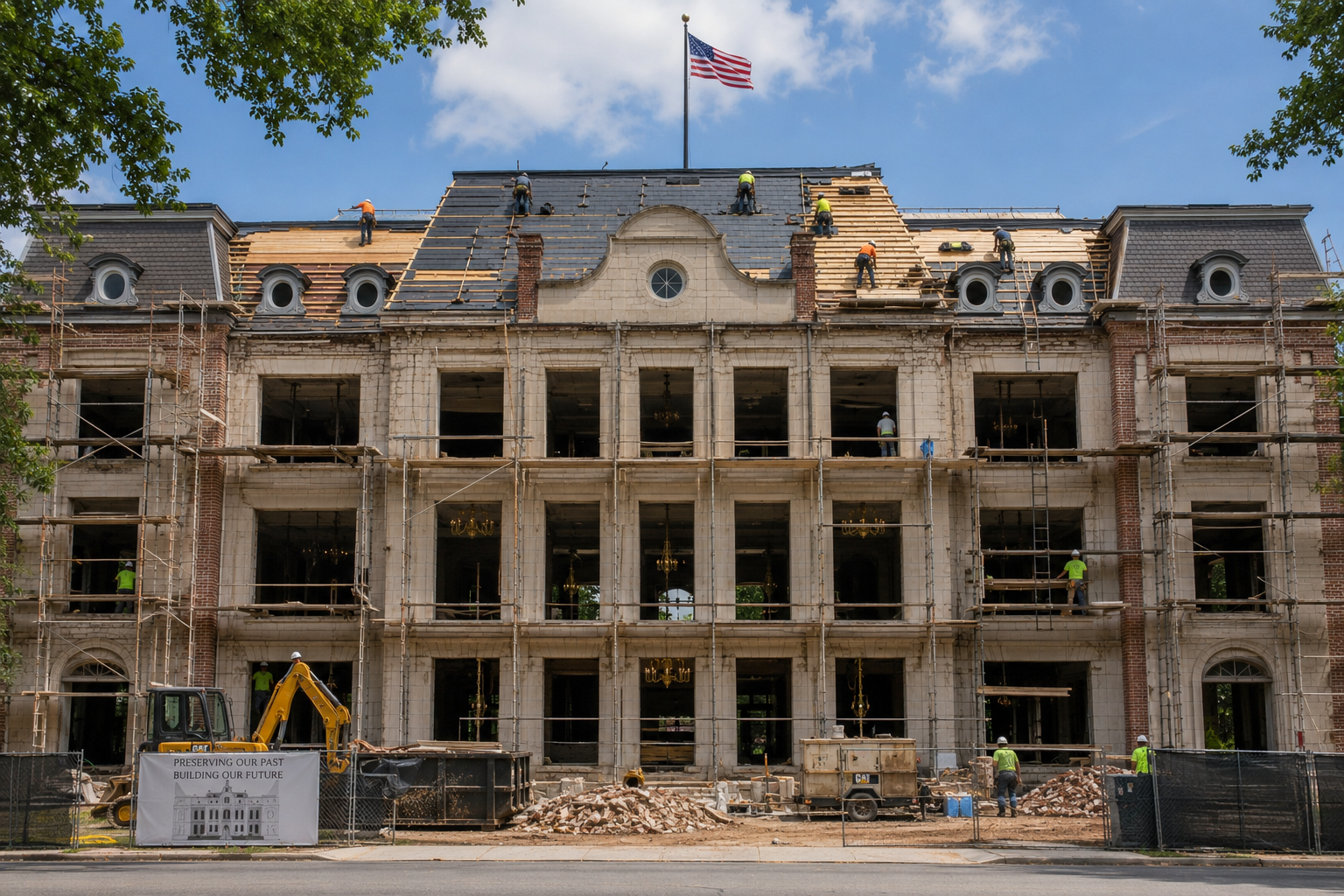
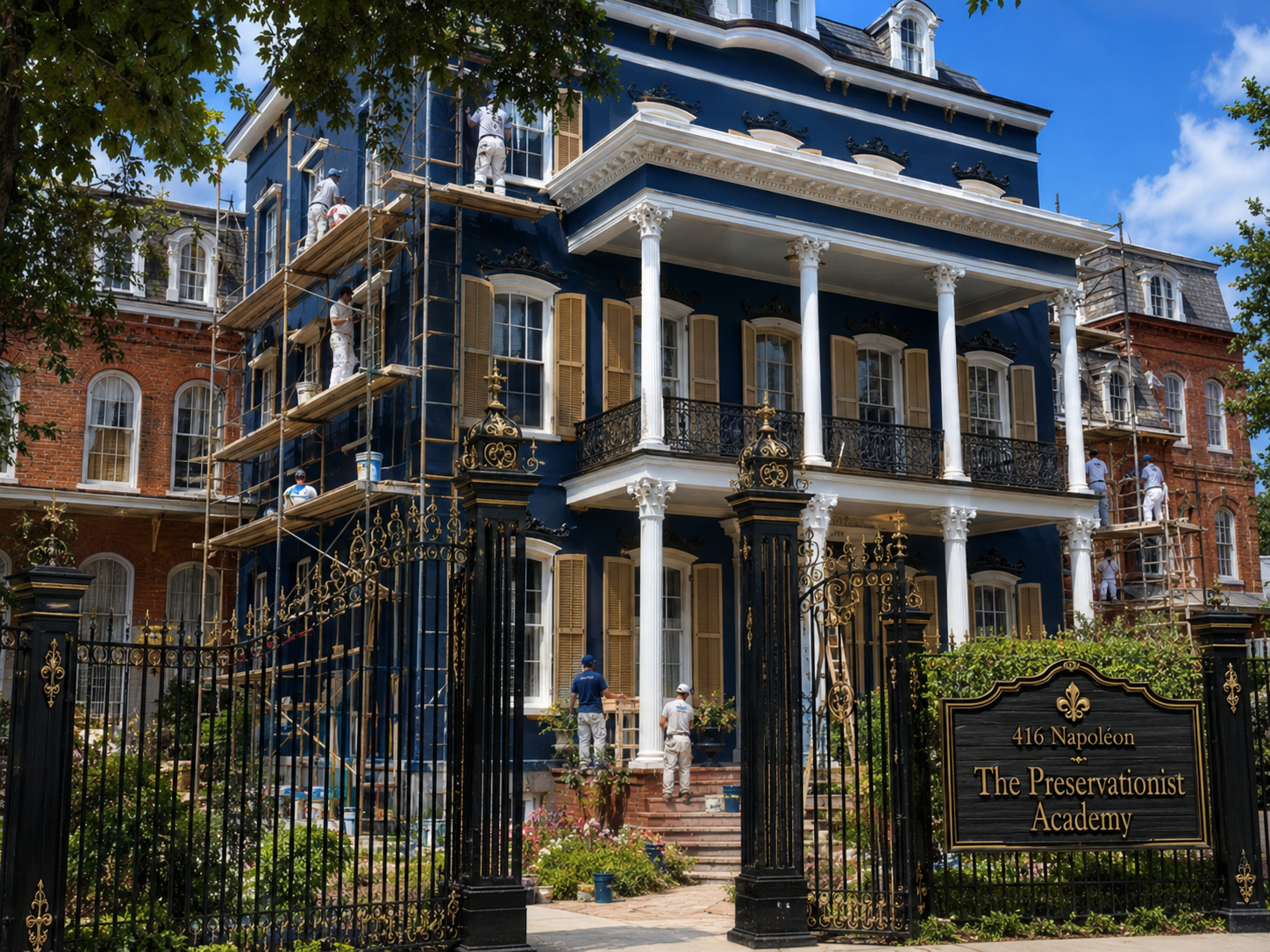
It all began with a simple idea fueled by a deep passion. As a small business, we pride ourselves on personal attention and dedication to every detail. Our approach is rooted in quality and integrity, ensuring that everything we do reflects our commitment to excellence. Now, thanks to our students, clients, donors and patrons like you, we have purchased a huge historical building in New Orleans, LA that we are currently renovating for our school's needs while preserving all the historical significance we can!
Flexible online academy
Our online academy provides the flexibility to pursue your passion for historic preservation from anywhere in the world. Access our comprehensive curriculum, participate in interactive discussions, and learn from leading experts at your own pace. Explore our diverse range of online classes and their detailed syllabi.
In-person learning opportunities
Immerse yourself in hands-on learning at our Charlotte, North Carolina campus. Our in-person programs offer practical experience and direct mentorship, allowing you to engage deeply with the principles and practices of historic preservation. Review available classes and their detailed syllabi to find the perfect fit for your academic journey.
WHO'S THE BOSS? MEET THE TEAM!
Our academy was established organically after our charity soceity saw a need and wanr for educational accessible spaces where students of all ages could learn about the buildings, neighborhoods and so on, that make up their communities and environment. The Historical Preservationist Soceity & Academy is Chaired by President Remy Lee Hooper, Psy-D. and co-chaired by Vice President Tamara Baucom, Secretary Dana Sherri and Executive Vice President Ronnie Bennet. Paramount Shinghi serves as our Chief IT Officer and Dr. David Paulsen, M.D. serves as our Dean of Education.
Why choose the Preservationist™ Academy?
The Historic Preservationist Society® operates on an extension school model, offering guaranteed acceptance to our programs. We are committed to supporting our students' success, ensuring continuous attendance as long as academic standards are maintained. This unique approach allows us to foster a dedicated community of learners passionate about preserving our heritage.